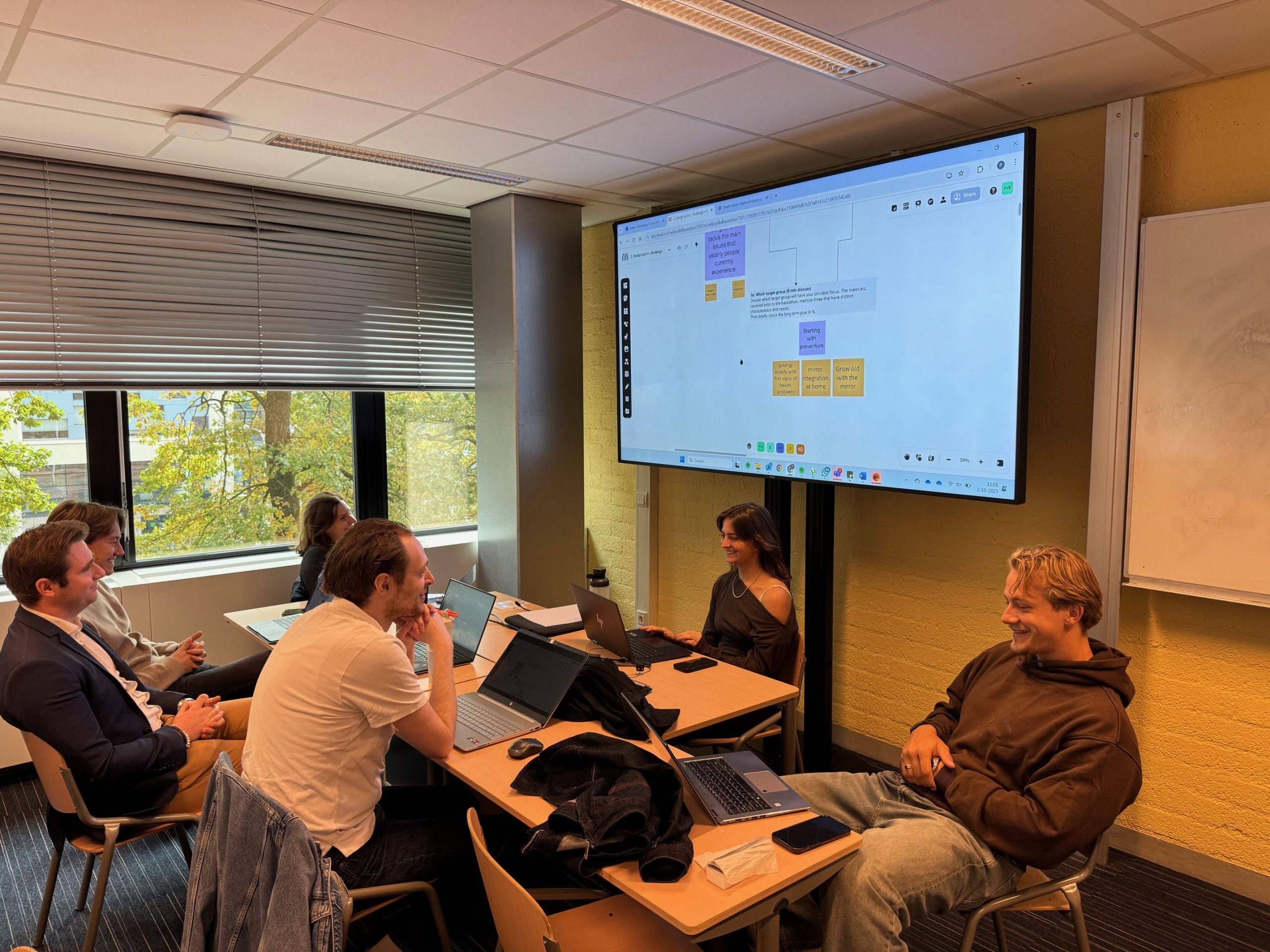
Last Thursday October 2nd, 60 Master students from the Nijmegen School of Management and the Faculty of Science, dove deeply into the world of elderly care, capacity problems in healthcare and, the potential application of healthcare technology to assist both elderly people and their caregivers in their daily lives and professions.
Vilente Care and OnePlanet Research Center asked the students during a one-day Future of Health hackathon, to develop concepts for health data feedback via a smart mirror.
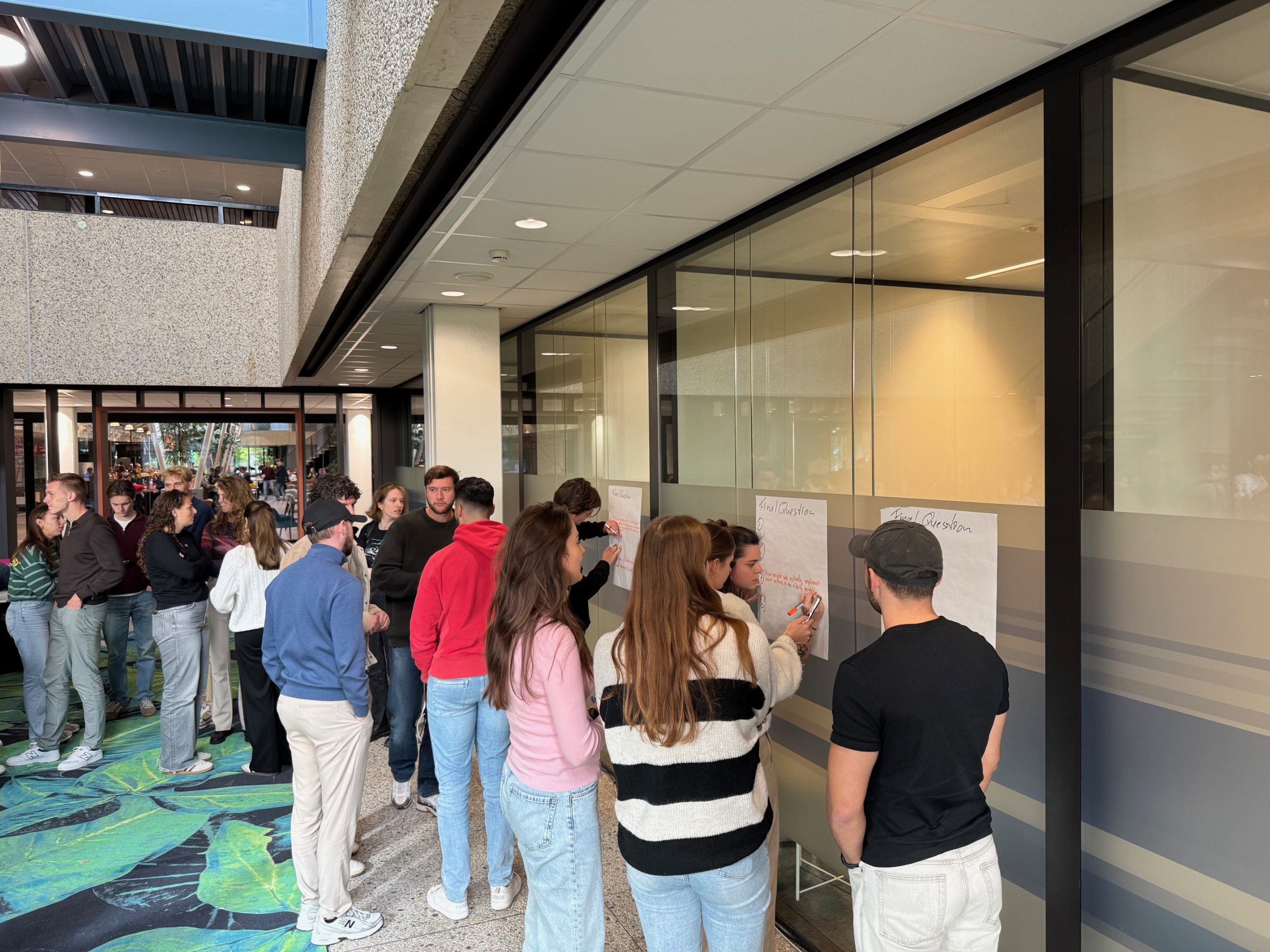
Students had to weigh several considerations about the added value of a smart mirror for this population segment. For example: how can a smart mirror assist elderly people, that are not very familiar with smartwatches and smartphones, and help them gain insights in their health and perceive self-control? And how can such smart health technology be implemented in their daily life with minimal impact on routines?
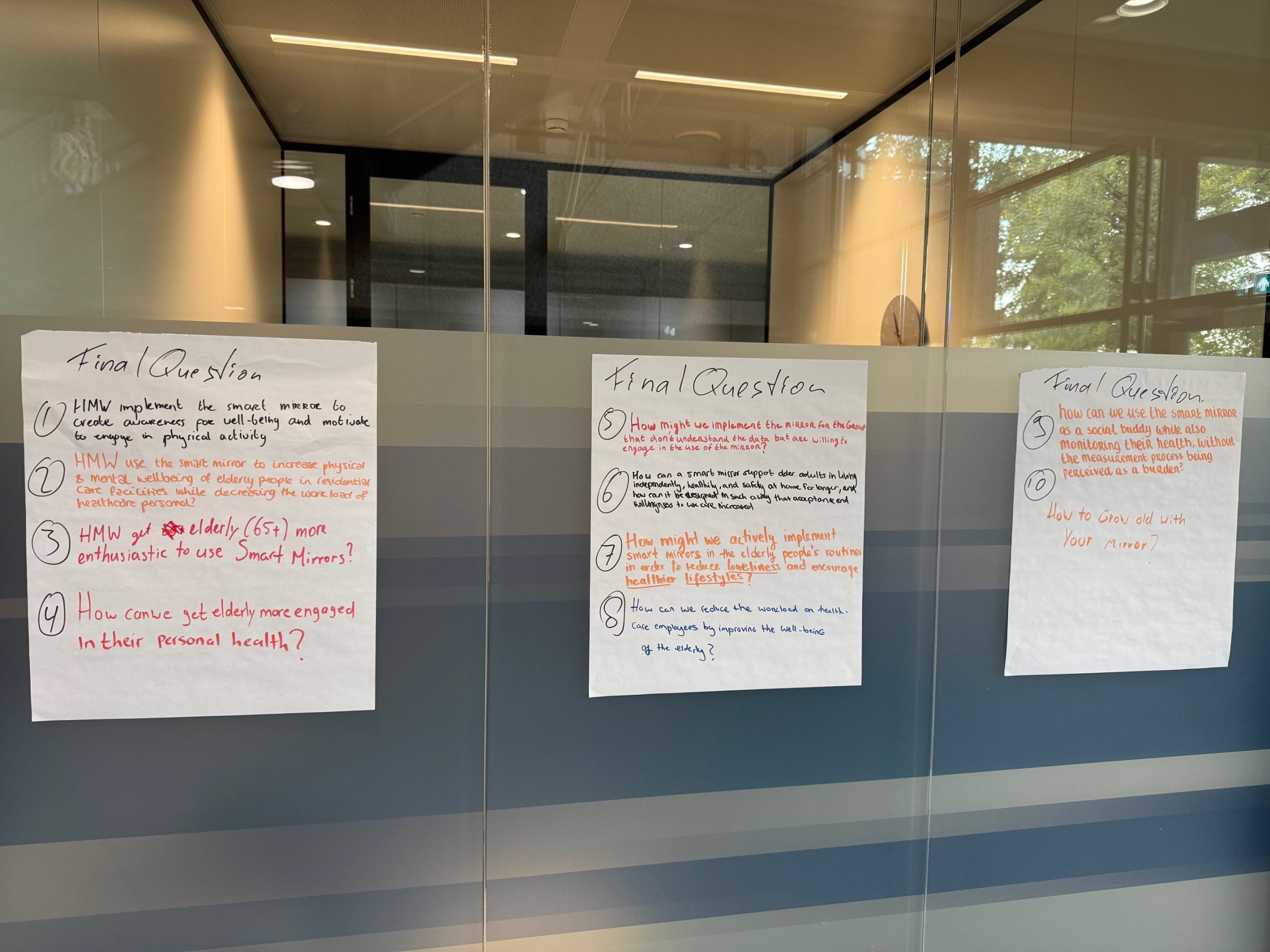
The students got to build from key user insights that were identified by nursing and industrial product design students already:
- No weird tricks: minimize the technical aspects, less is more
- ‘If I am healthy, I want to know nothing. If I am unhealthy, I want to know everything’
- Elderly people have a hard time reading small text
- They want to be owner of their own data
- The mirror should start with questions, to make a connection to the user first
The 10 teams developed great concepts that tapped into interesting principles. Some concepts focused on reducing loneliness and stimulating social and physical wellbeing. Others functioned as ‘health coach’ that provided ideas and suggestions for healthy meals and activities. Many concepts combined it with other more hands-off devices such as smart socks, and a few even combined it with light therapy. To interact with it and ensure privacy, some teams chose voice-based interaction versus buttons and others fingerprint recognition versus voice recognition. But all teams managed to put the elderly person really in the center of the design and were aimed at reducing workload for the caregiver.
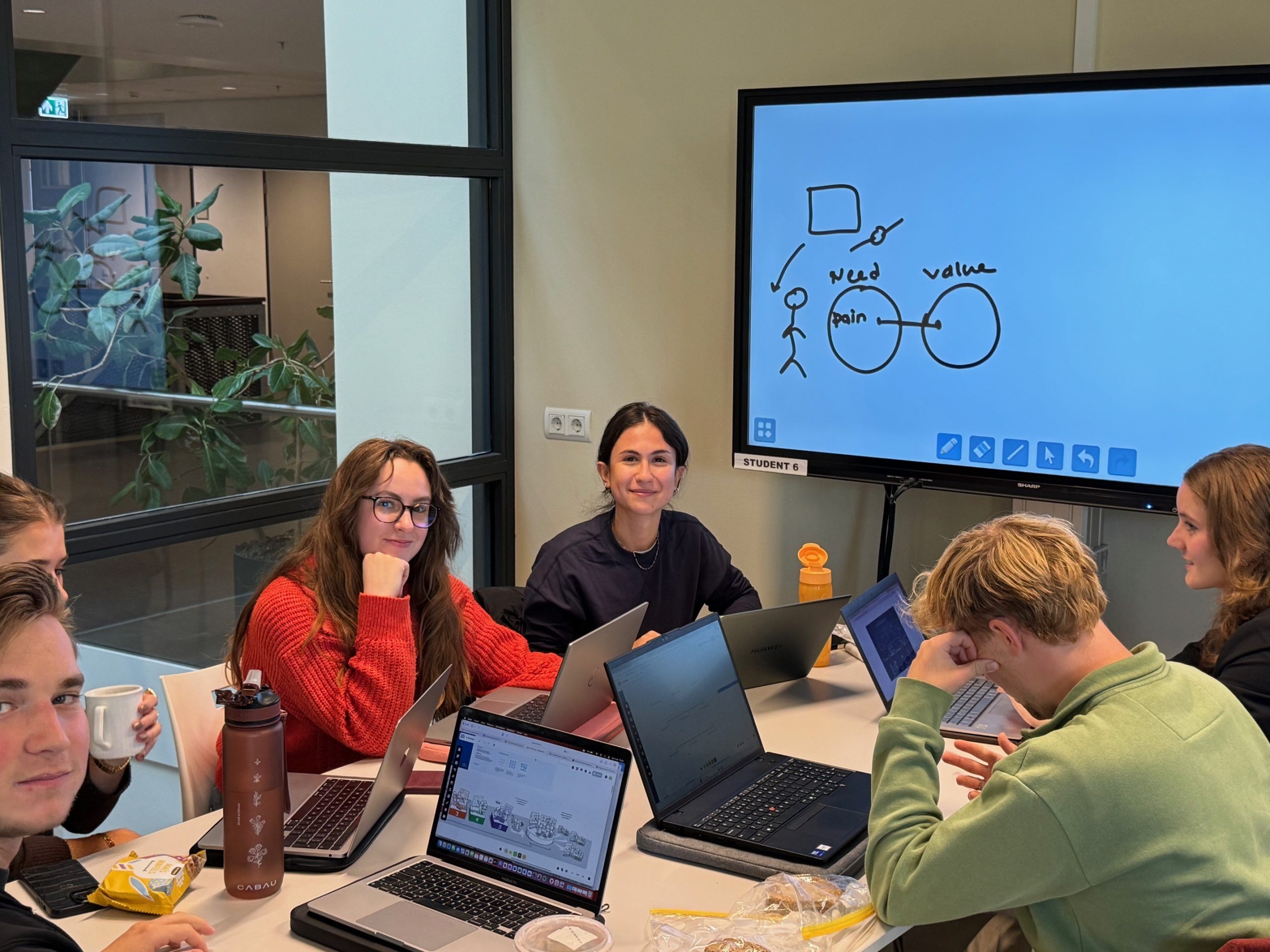
Students were very enthusiastic. They indicated that they liked exchanging ideas and cooperating with those from different disciplines, and that the business development-templates helped them structure and communicate their ideas. Most interesting, by delving into the subject, they developed insights and an appreciation for elderly care and the use of healthcare technology.
The winning team focused on engagement and a sense of belonging and incorporated social interaction components, like STRAVA, by suggesting physical activities with other elderly people in the care home. These winners are invited to visit the VilenteXperience to play a serious game in a smart care home, to really experience the future of elderly home care.
This hackathon relates to the OnePlanet Zorgen voor Morgen and Leerwerkplaats Slimme Zorgwoning projects.